UNAIDS
The Southern African Development Community (SADC), China, UNAIDS and the Global Health Innovation Institute (GHII) have reached an agreement to deepen cooperation on regional pharmaceutical manufacturing, technology transfer and health security.
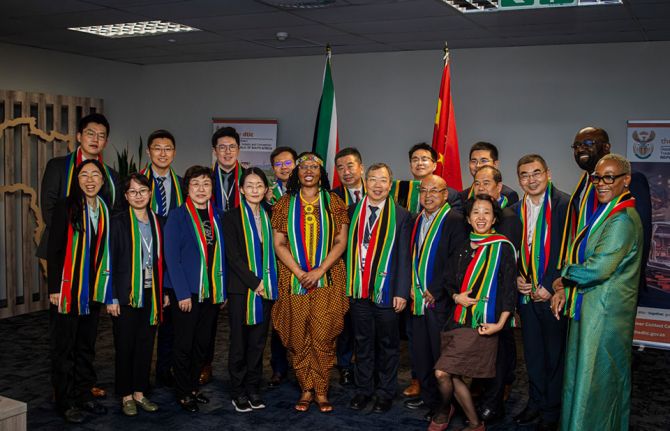
The collaboration follows a joint visit by representatives of the four partners to pharmaceutical and health-technology production facilities in Johannesburg, Durban and Cape Town, South Africa, where the delegation assessed existing manufacturing and innovation capabilities.
The facilities visited span several areas considered strategically important to Africa's future health security, including pharmaceutical and vaccine manufacturing, biotechnology, genomics and diagnostics.
The discussions identified opportunities to build on these capabilities while addressing some of the structural barriers that have historically limited the growth of pharmaceutical manufacturing across the continent.
For Southern Africa, the objective is not simply to establish more manufacturing plants. The partners are looking at how technology, investment, skills, regulation, procurement and regional markets can be brought together to create a more sustainable pharmaceutical manufacturing ecosystem.
From manufacturing ambition to practical action
Africa continues to rely heavily on imported medicines and health technologies, leaving many countries vulnerable to international supply disruptions, price fluctuations and changes in global demand.
The COVID-19 pandemic exposed these vulnerabilities, particularly around vaccines, diagnostics and other critical health products. Since then, governments and regional institutions have increasingly placed local and regional manufacturing at the centre of strategies aimed at strengthening health security.
The latest Southern Africa-China collaboration reflects this shift from policy ambition toward implementation.
“This exchange was about moving from ambition to practical action,” said Eva Kiwango, Director and Representative of the UNAIDS Office in China.
Kiwango said Southern Africa has the capacity to expand regional manufacturing and improve access to essential HIV and other health products, but stressed that achieving this will require sustained investment, alignment of regulatory frameworks, technology transfer, skills development, strategic multilateral partnerships and innovative financing.
These requirements highlight a fundamental challenge facing African pharmaceutical manufacturing: building production capacity requires considerably more than physical infrastructure.
Manufacturers also need access to appropriate technologies, qualified personnel, financing, reliable raw materials, regulatory approval and, critically, sufficient demand to operate facilities at commercially viable levels.
Pooled procurement could unlock regional scale
One of the most significant priorities identified during the exchange is the potential use of pooled procurement and stronger demand forecasting to create more predictable markets for African manufacturers.
The partners discussed developing a regional list of essential HIV and sexual and reproductive health commodities, alongside mechanisms for forecasting demand and coordinating procurement.
This could address one of the longstanding challenges facing pharmaceutical manufacturers operating in Africa: market fragmentation.
African pharmaceutical markets are divided among numerous countries, each with different procurement systems, regulatory requirements, product registrations and purchasing cycles. For manufacturers, this can increase the cost and complexity of expanding across borders.
Regional procurement mechanisms could potentially aggregate demand across multiple countries, giving manufacturers greater visibility over future orders and improving the prospects for economies of scale.
Predictable demand could also make it easier for manufacturers to justify investments in production lines, quality systems, research and development and workforce development.
For governments, pooled procurement could potentially improve purchasing power while strengthening supply security.
Technology transfer at the centre of cooperation
China's participation brings another important dimension to the initiative.
The cooperation is expected to create opportunities for technology transfer, skills development and investment, linking Chinese manufacturing and technical capabilities with emerging pharmaceutical capacity in Southern Africa.
An official from China's National Disease Control and Prevention Administration (NDCPA) said the exchange had strengthened mutual understanding and identified concrete opportunities for cooperation between China and Southern Africa.
By combining strengths in policy, technology, manufacturing and market development, the partners aim to advance local pharmaceutical production, strengthen health security and support sustainable access to quality health products.
Technology transfer could be particularly important for African manufacturers seeking to move beyond basic pharmaceutical formulation into more complex areas of production.
Building capabilities in biotechnology, vaccines, diagnostics and other advanced technologies could gradually expand the range of health products manufactured within the region.
Industry partnerships could accelerate investment
Private-sector participation will be critical to turning the cooperation into sustainable manufacturing capacity.
Xiaoxia An, CEO of Desano Pharmaceutical Group, said the visit highlighted significant opportunities for China-Southern Africa cooperation in pharmaceutical development.
“By combining our respective strengths in manufacturing, innovation, and market development, we can support strengthening local production capacity, improve access to quality medicines, and contribute to better health outcomes for the people across Southern Africa,” An said.
Such partnerships could take different forms, including technology licensing, contract manufacturing, joint ventures, workforce training, technical assistance and investment in new production facilities.
For African pharmaceutical companies, partnerships with international manufacturers can provide access to technologies and expertise that would otherwise require significant time and capital to develop independently.
At the same time, African manufacturers offer international partners access to growing markets and increasing demand for locally produced health products.
HIV remains a major priority
HIV is an important driver of the initiative.
More than half of people living with HIV who are not receiving lifesaving antiretroviral treatment are in sub-Saharan Africa, according to UNAIDS.
Strengthening regional pharmaceutical production could therefore have important implications for the resilience of HIV treatment supply chains.
However, the potential benefits extend beyond HIV. The manufacturing infrastructure, workforce capabilities, regulatory systems and procurement mechanisms developed through HIV programmes can potentially support production and distribution of medicines and technologies for other diseases.
This could make HIV-related manufacturing investment part of a broader strategy for strengthening pharmaceutical systems across the region.
The initiative aligns with the United Nations Political Declaration on HIV/AIDS, which calls for greater health sovereignty and stronger cooperation to advance local and regional production of HIV and other health technologies as part of efforts to end AIDS as a public-health threat by 2030.
Regulation remains critical
Expanding pharmaceutical production will also require stronger and more harmonised regulatory systems.
Manufacturers seeking to supply multiple African countries can face significant duplication when products must undergo separate registration and regulatory processes in individual markets.
Greater regulatory cooperation and convergence could reduce these barriers while maintaining standards for quality, safety and efficacy.
For regional manufacturing to succeed, production capacity therefore needs to develop alongside regulatory capacity.
The partners have identified regulatory systems as one of the areas requiring continued support, reinforcing the importance of linking industrial policy with medicines regulation.
Can Africa create commercially sustainable manufacturing?
The Southern Africa-China initiative reflects a broader transformation taking place across Africa's pharmaceutical sector.
Governments are increasingly recognising that local manufacturing cannot be built solely through public policy or donor funding. It requires commercially sustainable markets capable of attracting long-term private investment.
That makes demand forecasting and pooled procurement particularly important.
If regional governments can provide manufacturers with greater visibility over demand, while investors and technology partners provide capital and expertise, Africa could gradually develop a more integrated pharmaceutical manufacturing base.
The approach could also strengthen regional supply chains by reducing dependence on distant manufacturing hubs for selected essential medicines and health technologies.
For Southern Africa, the immediate challenge will be translating the opportunities identified during the exchange into concrete projects, investment commitments and measurable increases in manufacturing capacity.
A potential model for Africa
The latest cooperation between SADC, China, UNAIDS and GHII comes as African countries across the continent pursue similar strategies to strengthen local pharmaceutical production.
The emerging model increasingly involves five interconnected elements: manufacturing capacity, technology transfer, skilled human resources, coordinated procurement and predictable markets.
If these components can be successfully aligned, pharmaceutical manufacturers may have stronger incentives to invest in Africa while governments gain greater resilience in the supply of essential health products.
The Southern Africa-China partnership could therefore become more than a bilateral or regional cooperation initiative. It could provide lessons for other African regions seeking to build sustainable pharmaceutical manufacturing ecosystems.
Ultimately, the success of the initiative will depend on whether the commitments translate into factories, technology transfers, trained workers, regulatory improvements, procurement agreements and products reaching patients.
For Africa's pharmaceutical industry, the question is increasingly shifting from whether the continent should manufacture more of its own medicines to how regional markets, investment and partnerships can make that manufacturing commercially and technically sustainable.

Writer
APR Team
African Pharmaceutical Review team dedicated to providing the latest news, insights and developments from the pharma, biotech and medtech industries.